If an unexpected job loss, medical bill, or car repair happened tomorrow, would your savings cover it?
Knowing how much emergency fund you should have can help you avoid high-interest debt and protect your long-term financial goals.
For most U.S. households, a reasonable target is three to six months of essential living expenses, but your ideal amount depends on your income stability, dependents, insurance coverage, and financial obligations.
Here is how to calculate your target, decide how much cash to keep accessible, and build your emergency savings without overwhelming your monthly budget.
How much emergency fund should you have?
How Much Emergency Fund Should You Have?
Quick answer · 2027 guide
Most households should aim for 3–6 months of essential living expenses. Your ideal target depends on your income stability, monthly bills, dependents, and financial obligations.
A practical target for many households
3–6 monthsOf essential expenses, not your gross salary.
Your savings milestones
Starter goal: $500–$1,000
Build an initial cushion for minor surprises, such as a car repair or an unexpected bill.
3 months of expenses
May suit people with stable employment, low fixed costs, and dependable backup household income.
6 months of expenses
A useful target for households with housing costs, debt payments, insurance premiums, or dependents.
9–12 months of expenses
Consider a larger reserve if you are self-employed, the sole household earner, or have unpredictable income.
Rule of thumb: Monthly essential expenses × desired coverage months = your emergency fund target.
Calculate Your Target Amount
Calculate your target using essential monthly expenses × the number of months you want to cover.
Why Your Emergency Fund Matters in 2027
Emergency savings provide financial flexibility when your income stops or an unavoidable expense arrives.
Without a cash reserve, even a temporary setback can lead to credit card debt, missed payments, or withdrawals from retirement investments.
Inflation also makes it important to review your savings target.
According to the U.S. Bureau of Labor Statistics, the Consumer Price Index increased 3.7% over the 12 months through September 2026.
Gasoline prices contributed significantly to the monthly increase.
This is a reminder that household costs can change and an emergency fund calculated several years ago may no longer cover today’s bills.
See the BLS Consumer Price Index report.
Your emergency fund is not intended to maximize investment returns.
Its main purpose is to help you pay essential bills when life does not go according to plan.
How Much Emergency Fund Should You Have?
The familiar three-to-six-month rule is a useful starting point, not a universal requirement.
The appropriate amount depends on how much you need to survive financially if your income drops.
| Financial Situation | Suggested Savings Target |
|---|---|
| Building your first emergency reserve | $500–$1,000 |
| Stable job, low expenses, limited dependents | 3 months of essential expenses |
| Typical household with ongoing obligations | 6 months of essential expenses |
| Single-income family or unstable employment | 6–12 months |
| Freelancer or self-employed worker | 6–12 months |
| Retiree | Individualized reserve based on spending, income, and portfolio risk |
These are planning guidelines rather than mandatory financial rules. Your personal circumstances may justify a different target.
Fidelity recommends beginning with $1,000 and working toward three to six months of essential expenses.
Its emergency savings guide also discusses accessibility, insurance, and ways to build savings.
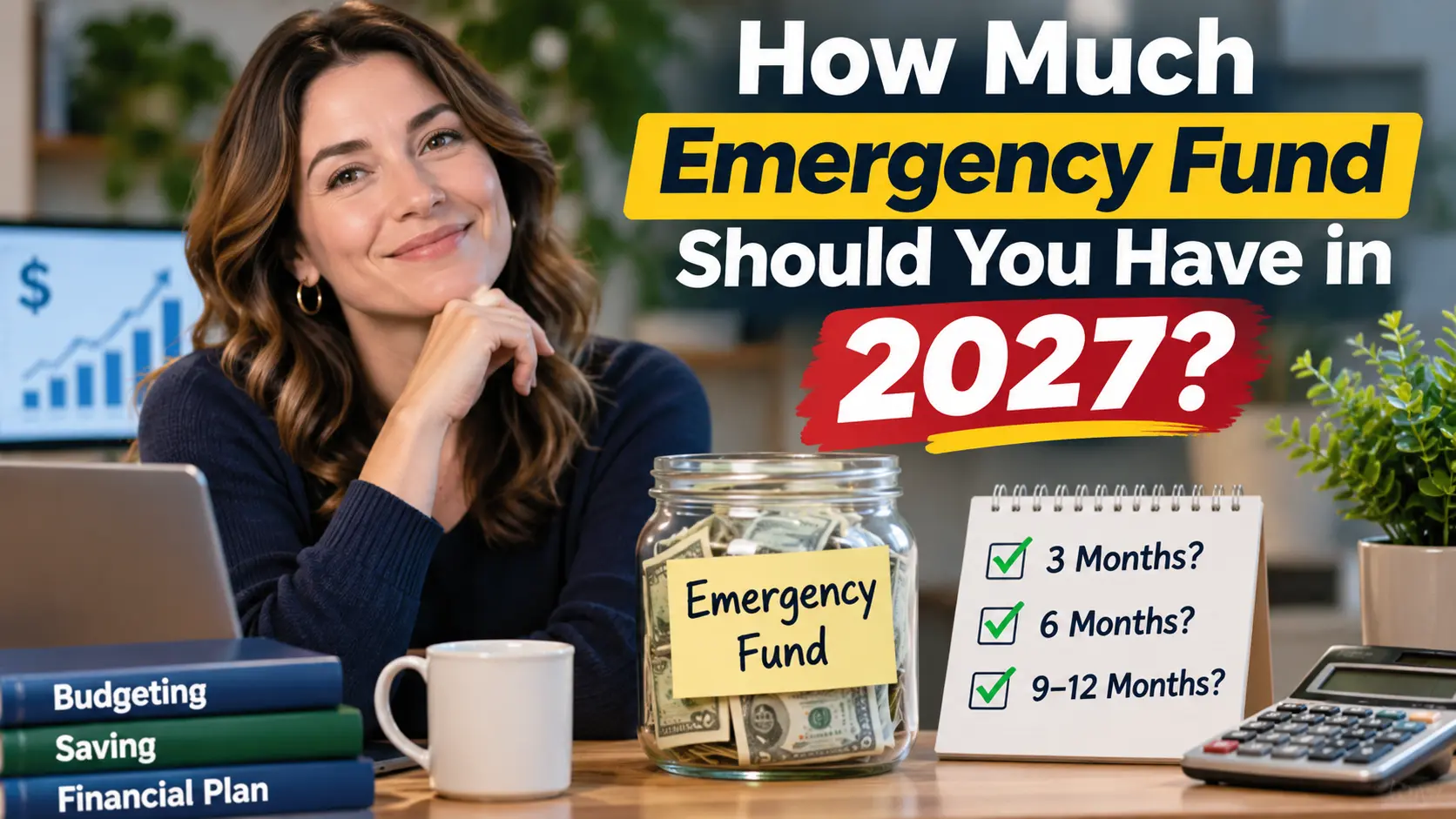
Should you save three months or six months of expenses?
Choose three months if you have a stable job, strong job prospects, low fixed costs, and another dependable source of household income that could cover bills.
Consider six months if you have a mortgage, children, significant minimum debt payments, high healthcare costs, or limited access to other financial support.
A larger reserve may be appropriate when replacing your income could take longer than average.
For example, a specialized professional in a narrow job market may need more protection than someone who can quickly find comparable work.
How to Calculate a Six-Month Emergency Fund
The most useful method is to calculate essential expenses rather than automatically multiplying your gross salary by six.
Step 1: Add your essential monthly expenses.
Include costs you would still need to pay during a financial setback:
- Rent or mortgage, including necessary property-related payments
- Groceries and basic household supplies
- Electricity, water, heating, and essential communications
- Health, auto, renters, or homeowners insurance premiums
- Minimum payments on credit cards, student loans, and other debts
- Transportation, fuel, and necessary vehicle maintenance
- Childcare and essential medical expenses
Exclude discretionary purchases such as vacations, restaurant meals, entertainment, and optional shopping. You can reduce these costs during an emergency.
Step 2: Multiply the total by your chosen number of months.
Use this formula:
Emergency fund target = Essential monthly expenses × Coverage months
For example, suppose your essential household expenses total $4,000 per month.
| Coverage Period | Emergency Fund Target |
|---|---|
| 1 month | $4,000 |
| 3 months | $12,000 |
| 6 months | $24,000 |
| 9 months | $36,000 |
| 12 months | $48,000 |
In this example, a six-month emergency fund would be $24,000.
Step 3: Subtract your existing emergency savings.
If you already have $7,000 in a dedicated savings account, your remaining target is:
$24,000 − $7,000 = $17,000 still to save.
Only count money you can realistically access for emergencies. Money already committed to upcoming bills, taxes, or another specific goal should not automatically be counted.
Emergency Fund Calculator: Find Your Savings Target
Use the calculator below to estimate your target. Enter your essential expenses and current emergency savings to see how much more you need to save.
Emergency Fund Calculator
Calculate how much you need to cover essential expenses if your income is interrupted.
Your emergency fund target
$24,000
Estimates use your entered expenses and exclude interest. Count only money available for emergencies. This tool provides educational estimates, not financial advice.
- Housing costs per month
- Food and household essentials
- Utilities and communications
- Insurance and medical expenses
- Transportation
- Minimum debt payments
- Childcare and other essential costs
- Current emergency savings
- Desired coverage: 3, 6, 9, or 12 months
Calculation: Add the monthly expenses, multiply by the selected coverage period, and subtract existing emergency savings. If the result is below zero, display $0 remaining to reach the selected target.
For an additional reference, use NerdWallet’s Emergency Fund Calculator to explore a savings goal based on your circumstances.
How Much Emergency Savings Should a Household Keep?
A household’s recommended emergency fund amount depends on its monthly spending, number of earners, and financial responsibilities.
Consider these illustrative examples:
| Household Profile | Essential Monthly Expenses | Six-Month Target |
|---|---|---|
| Single renter | $2,500 | $15,000 |
| Couple with two incomes | $4,000 | $24,000 |
| Family with children | $5,500 | $33,000 |
| Single-income household | $4,500 | $27,000 |
These figures are examples, not national averages. Use your actual expenses to calculate a realistic target.
A two-income household may be able to start with three months of expenses if both incomes are stable and reasonably independent. If both earners work in the same industry, however, an industry-wide downturn could affect them simultaneously.
A family with children may need more cash because childcare, healthcare, and housing costs can be difficult to reduce quickly.
How Much Should You Put Into Savings Each Month?
You do not need to save thousands of dollars every month to make progress. Your contribution should fit your income, essential expenses, and existing debt obligations.
Start by subtracting your current emergency savings from your target. Then divide the remaining amount by the number of months in which you want to reach your goal.
For example, if you need another $6,000:
| Monthly Contribution | Approximate Time to Goal |
|---|---|
| $100 | 60 months |
| $250 | 24 months |
| $500 | 12 months |
| $750 | 8 months |
| $1,000 | 6 months |
These estimates exclude interest and assume you do not withdraw money during the saving period.
To make the process easier:
- Set up an automatic transfer after each payday.
- Start with an affordable amount instead of waiting until you can save a large sum.
- Direct part of bonuses, tax refunds, or other windfalls toward your goal.
- Review subscriptions and discretionary spending for temporary savings opportunities.
- Increase your automatic contribution when your income rises.
If you have expensive revolving credit card debt, balance emergency savings with debt repayment. A starter cash reserve can prevent every unexpected bill from creating more debt, while paying down high-interest balances can reduce your financial burden.
Where Should You Keep Your Emergency Fund?
An emergency fund needs two important characteristics: safety and liquidity. Liquidity means being able to access your money when you need it without a substantial delay, penalty, or risk of loss.
1. High-yield savings account
A high-yield savings account is a practical choice for many households. It pays interest while keeping your money accessible.
Compare the annual percentage yield (APY), minimum balance requirements, fees, transfer limits, and withdrawal access. APY measures the annual rate of return on a deposit, including the effect of compounding.
2. Bank or credit union money market deposit account
A money market deposit account may provide competitive interest and convenient access through checks or a debit card, depending on the institution.
Eligible deposits at FDIC-insured banks are generally insured up to $250,000 per depositor, per insured bank, per ownership category. Eligible deposits at federally insured credit unions have comparable coverage through the NCUA.
Learn more from the FDIC’s deposit insurance resources.
3. Money market mutual fund
A money market mutual fund is an investment product, not a bank deposit. It can be useful for some investors, but it is not FDIC-insured and is not risk-free. Access to withdrawn cash may also depend on settlement times and account procedures.
Do not confuse a money market mutual fund with a bank money market deposit account.
4. Treasury bills and certificates of deposit
Short-term Treasury bills and certificates of deposit (CDs) may suit a portion of your reserves if you understand their maturity dates and access restrictions.
Selling Treasury bills before maturity can involve price and transaction considerations, while early CD withdrawals may trigger penalties.
Avoid placing your entire emergency fund in products that could delay access to money during a job loss or medical emergency.
Expert insight: Keep at least your immediate emergency needs in an account you can access easily. Consider higher-yield or less-liquid options only for money that you can afford to leave untouched until it becomes available.
Should You Keep Your Emergency Fund in Cash or Invest It?
For most households, the core emergency fund should not be invested in stocks, cryptocurrency, or other volatile assets.
An emergency can occur when financial markets are falling. If you need money at that time, you could be forced to sell investments at a loss.
Cash savings may earn less than investments over the long term, but an emergency reserve serves a different purpose: protecting your ability to pay bills without selling long-term assets at an unfavorable time.
Keep physical cash at home only in a modest amount suitable for short-term disruptions, such as a power outage. Large amounts of physical cash can be lost, stolen, or destroyed and generally do not earn interest.
When Should You Save More Than Six Months?
Consider a larger emergency fund if:
- You are self-employed or your income varies considerably.
- Your household relies on one primary earner.
- Your industry has frequent layoffs or seasonal work.
- You have dependents who rely on your income.
- You have significant healthcare costs or a high insurance deductible.
- You live in an area exposed to hurricanes, wildfires, floods, or other costly disruptions.
- You expect a long job search because of your occupation or location.
Insurance can reduce some financial risks, but it does not eliminate the need for cash. Review your health insurance deductible, homeowners or renters coverage, auto policy, and disability insurance. Premiums are the amounts you pay to maintain coverage; deductibles are amounts you generally must pay for covered services or losses before the insurer begins paying under the policy terms.
For retirees, the calculation may differ because Social Security, pensions, investment income, and portfolio withdrawals affect monthly cash needs. A reserve should be coordinated with the broader retirement plan rather than applying a universal one-to-three-year cash rule.
People Asking:
Is $10,000 enough for an emergency fund?
It depends on your essential monthly expenses. If you spend $2,000 per month on necessities, $10,000 covers five months. If your essentials cost $5,000, it covers only two months. Compare the balance with your personal target.
Is a $1,000 emergency fund enough?
It is a useful starting milestone, especially if you have little savings. However, it may not cover a major car repair, an insurance deductible, or several months without income. Treat it as the first step toward a larger reserve.
Should I count my 401(k) as my emergency fund?
Generally, no. Retirement accounts are designed for long-term goals, and withdrawals can involve income taxes, penalties, or lost future growth. A separate cash reserve can help you avoid tapping retirement assets during a temporary crisis.
Should I include debt payments in my emergency fund calculation?
Yes. Include minimum required payments on debts such as auto loans, student loans, and credit cards. You may be able to reduce discretionary expenses during a crisis, but missing required payments can create additional financial problems.
Should I rebuild my emergency fund after using it?
Yes. Using the fund for a genuine emergency is what it is designed for. Once the immediate problem is resolved, review your budget and restart automatic contributions until you reach your target again.
Conclusion: Build an Emergency Fund That Fits Your Life
For many Americans, a reasonable emergency savings goal is three to six months of essential living expenses. A larger reserve may be appropriate if your income is unpredictable, you support dependents, or your household has limited financial flexibility.
Start with a manageable milestone, calculate your target from real expenses, and automate monthly contributions. Keep the core fund accessible in a suitable savings account and review the target whenever your household expenses, income, or insurance coverage changes.
Your next step: Add up your essential monthly bills, choose a three-, six-, or twelve-month target, and calculate the difference between that amount and your current emergency savings. Then schedule an automatic transfer for your next payday.
Disclaimer
This article is for informational and educational purposes only and does not constitute professional financial, tax, or legal advice. Savings needs vary by individual circumstances. Consult a qualified financial professional for guidance tailored to your situation.
Related Posts:
- What Is FDLXX? Yield, Tax Perks & Who Should Use It
- ACA Open Enrollment 2027: Key Dates, Premium Increases, and What Lost Subsidies Mean for You
- Tax Brackets Married Filing Jointly: Rates & Calculator Guide
- How to Avoid State Taxes on Treasury Interest: A Guide for U.S. Investors
- Treasury Bills vs. CDs: Which Is Right for Short-Term Savings?